Global EUR/USD/GBP Virtual Accounts for International Sellers
International sellers—whether dropshippers, online retailers, or independent contractors—frequently face challenges collecting payments from customers across multiple countries and currencies. Conventional single-country bank accounts lead to high foreign exchange conversion costs (2–5%), slow settlement times (2–5 days), and ongoing compliance friction.
Virtual accounts in major currencies such as EUR, USD, and GBP solve these issues by allowing sellers to collect payments locally in the buyer’s currency, without being physically present in that country. These accounts provide dedicated local receiving details across borders, improving speed, cost efficiency, and cash flow.
Why Virtual Accounts Matter for International Sellers
Virtual accounts are issued by fintech platforms and function as digital bank details linked to a primary account. To customers, they appear as local bank accounts. For EUR, USD, and GBP, this enables:
- Local collection: Buyers pay using familiar rails—SEPA (EUR), ACH (USD), and FPS (GBP)—reducing cart abandonment
- No FX losses on receipt: Funds can be held in EUR, USD, or GBP without immediate conversion
- Faster settlements: Instant or same-day crediting instead of slow cross-border wires
- Simplified compliance: Platforms handle KYC and AML requirements on behalf of sellers
This setup is especially useful for sellers on Shopify, Amazon, or Etsy serving customers across the EU, US, and UK simultaneously.
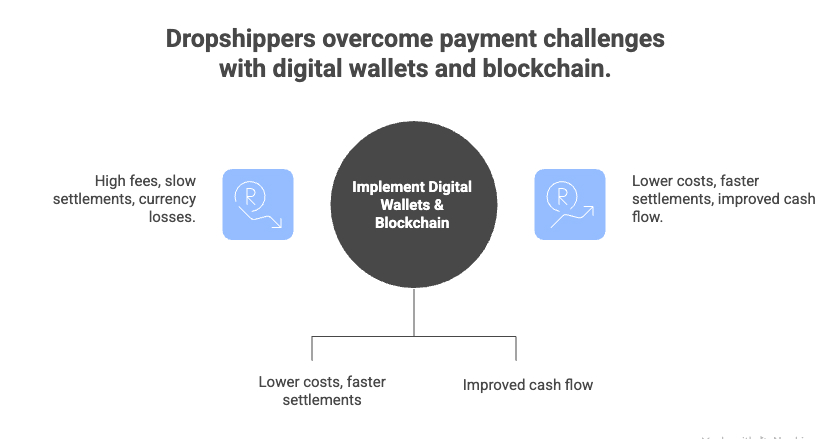
Flexible Payouts for Dropshippers and Global Sellers
Virtual accounts also improve payout flexibility. Sellers can hold balances in EUR, USD, and GBP, then pay suppliers in their preferred currency using local rails or stablecoins. For dropshippers paying Asian manufacturers, this avoids unnecessary FX conversions and preserves working capital.
Endl-Style Platforms as Practical Solutions
Fintech platforms such as Endl provide multi-currency wallets, stablecoin support, and virtual accounts in EUR, USD, and GBP.
With this setup, international sellers can:
- Track inflows in real time
- Generate local receiving details for customer payments
- Convert and transfer funds at near-market rates
- Integrate with e-commerce systems for automated balance management
This allows merchants to manage global revenue streams efficiently while maintaining regulatory compliance and operational visibility.
Real-World Impact for International Sellers
Consider a dropshipper selling to customers in the US, EU, and UK with $10,000 in monthly revenue:
-
Conventional setup:
$200 in transfer fees + 3% FX loss ($300) = $500 in overhead -
Virtual accounts:
Local receipts with 0% FX and minimal fees (<$50) = ~$450 saved per month
These savings can be reinvested into inventory, advertising, or market expansion.
Conclusion
By leveling the playing field for international sellers, virtual EUR/USD/GBP accounts transform cross-border payments from a cost center into a competitive advantage. As e-commerce continues to scale globally, these accounts enable faster collections, lower costs, and smoother operations across markets.
FAQs
Q1: What are virtual accounts, and how do they work?
Virtual accounts provide digital bank details (IBAN, routing number, or sort code) linked to a primary account. They appear local to payers and enable fast SEPA, ACH, or FPS receipts without FX conversion on receipt.
Q2: How much do virtual accounts save compared to traditional banks?
They enable same-day settlement instead of 2–5 days, cost under $1 instead of $25 wires, and eliminate 2–5% FX losses—saving $450+ on $10,000 monthly revenue.
Q3: Which platforms offer EUR/USD/GBP virtual accounts?
Platforms such as Endl, Stripe, Wise, and Payoneer provide local IBANs, routing numbers, and sort codes integrated with Shopify, Amazon, and Etsy.
Q4: Are virtual accounts compliant for international sellers?
Yes. Platforms manage KYC and AML requirements and support compliant payments via EU SEPA, US ACH, and UK FPS rails.
Q5: Can dropshippers pay suppliers from virtual accounts?
Yes. Sellers can hold EUR, USD, and GBP balances and pay suppliers via local networks or stablecoins at near-market rates.
Q6: What is the biggest benefit for Amazon and Shopify sellers?
Preserved margins from zero FX losses on incoming revenue and reduced cart abandonment due to local payment options.